
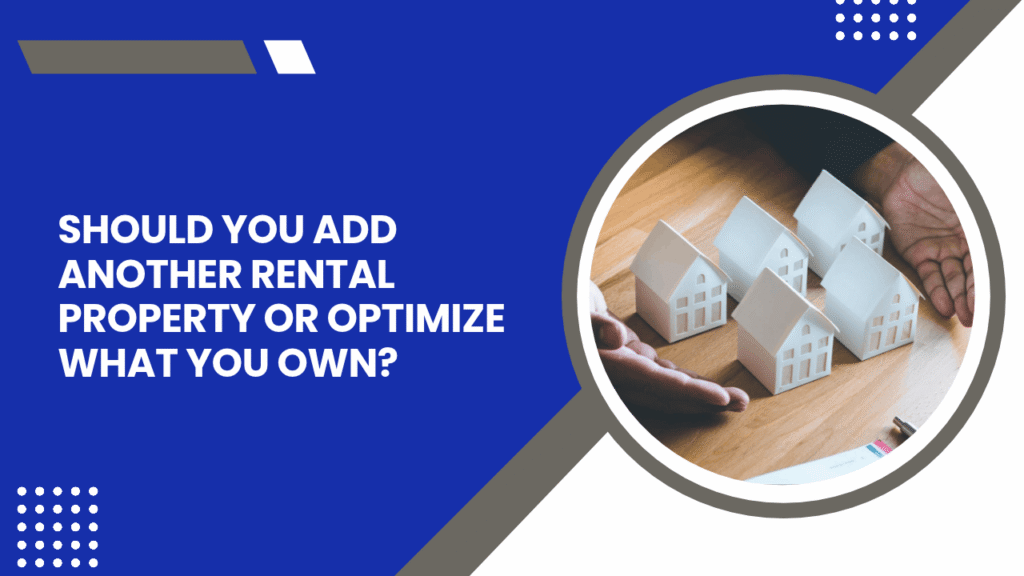
Are you preparing to acquire a new rental property?
That’s great, if your investment goals and existing portfolio support the endeavor. But if you’re hesitating, don’t forget that you can grow your portfolio by optimizing what you already have. Adding investments isn’t always the best way to increase earnings.
More doors usually mean more income, greater appreciation potential, and a larger portfolio. But scaling too quickly can also create unnecessary financial strain and operational inefficiencies.
Sometimes the smartest investment decision is not buying another property at all. It’s improving the performance of the properties you already own.
The challenge for investors is knowing when expansion makes sense and when optimization will deliver a better return with less risk.
Quick Look:
|
The Appeal of Adding another Rental Property
Acquiring another rental property can help investors grow equity, increase monthly cash flow, and diversify income streams. In strong rental markets, adding properties may also create long-term appreciation opportunities while spreading risk across multiple units or locations.
For investors with stable reserves, reliable financing, and efficient systems already in place, expansion may be the logical next step.
We caution you to remember that adding another property also introduces:
- Higher debt obligations
- Increased maintenance exposure
- More tenant management
- Additional vacancy risk
- Greater insurance and tax costs
Many investors underestimate how quickly expenses and operational complexity scale with each acquisition.
Why Optimization Is Often Overlooked
Real estate investors frequently focus on acquisition opportunities while ignoring underperforming assets already in their portfolio. Yet improving operational efficiency can often increase returns faster than purchasing another property.
Optimization may include:
- Raising below-market rents
- Reducing vacancy time
- Improving tenant retention
- Renovating outdated interiors
- Lowering maintenance costs
- Refinancing high-interest loans
- Improving property management systems
A property generating an extra $300 per month through strategic improvements may outperform the cash flow from a newly purchased property burdened by financing and closing costs.
Expansion Works Best with Strong Systems
Successful investors rarely scale based on emotion or fear of missing out. They grow when they have repeatable systems in place.
Before purchasing another rental, investors should have reliable property management processes and strong vendor relationships. You need adequate emergency reserves and clear investment criteria.
Without operational stability, adding more properties can magnify inefficiencies rather than profits.
Balance Growth and Efficiency
Real estate investing is not simply about accumulating the highest number of properties. It’s about building sustainable, profitable assets that perform consistently over time.
In some cases, buying another property is absolutely the right move. In others, improving occupancy, increasing rents strategically, or reducing operational waste may generate higher returns with far less risk.
Growth and optimization work best together.
Frequently Asked Questions
When should an investor buy another rental property?
Expansion often makes sense when current properties are performing well, reserves are strong, and systems are operating efficiently.
What does optimizing a rental property mean?
Optimization involves improving profitability through better management, renovations, rent adjustments, reduced vacancies, or lower operating expenses.
Is it better to renovate or buy another property?
It depends on expected returns. In some cases, strategic renovations can deliver stronger cash flow improvements than a new acquisition.
How much cash reserve should rental investors keep?
Many investors aim to maintain several months of operating expenses and mortgage payments per property for emergencies and vacancies.
Can poor management hurt portfolio growth?
Absolutely. Inefficient operations, high turnover, and deferred maintenance can reduce profitability and create long-term financial strain.
We’ll help you make the decisions that serve your portfolio best. Please contact us at Oceans Managing Group. We’re managing rental homes in Ormond Beach, Daytona Beach, and the surrounding areas.